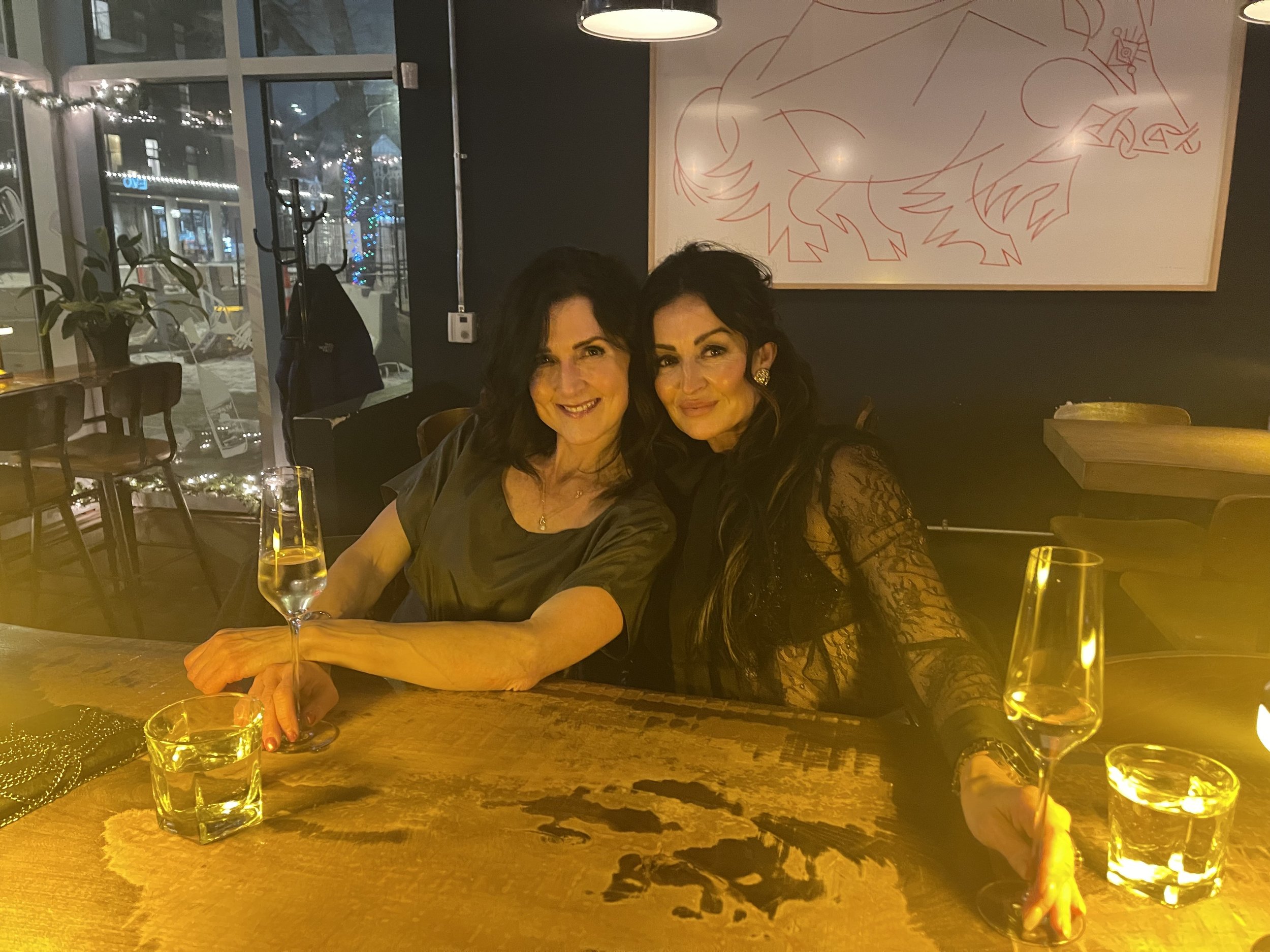
I’m a Certified Personal Trainer and I Drink Wine

From my lived experience, a 48-year-old woman, who has been a personal trainer for over 25 years, who lifts heavy, coaches women through menopause, and cares deeply about strength, muscle, and long‑term health--I believe enjoying wine in moderation does not make you unhealthy, irresponsible, or bad.

I study wine. I appreciate it. I respect it. What matters is HOW you drink, not whether you drink. I teach moderation. Real moderation. The kind that applies to everything you eat and drink. Not restriction. Not fear‑based messaging. Not the internet’s obsession with extremes. For this conversation, I am using wine as the example because it is what I am known for. It is what I study. It is what I love. But the principles apply to any alcohol. The drink is not the point. The behaviour is.

Disclaimer

This message is not intended for anyone dealing with alcohol or substance use issues. If you struggle with control, dependency, or negative consequences from drinking, this framework is not for you. Seek professional support that aligns with your needs.

Moderation is built on one idea: you can enjoy all foods and drinks without swinging into excess or restriction. You do not need to eliminate carbs, sugar, wine, or restaurant meals. You need predictable patterns that keep you steady.

Most women do not struggle because they do not know what is healthy. They struggle because they bounce between extremes. Clean eating followed by overeating. Sober months followed by chaotic weekends. Moderation removes the pendulum swing. Wine fits into this exactly the same way food does.

What Healthy Wine Intake Looks Like

Moderation is not vague. It is structured and intentional.

MY realistic pattern: * this works for ME!

  • Four alcohol‑free days per week

  • One to two glasses on the days I choose

  • Approximately five 5‑oz pours per week * sometimes it’s 2-4, sometimes it’s 1.

  • Dry, lower‑alcohol / sugar wines

  • Not drinking to get drunk

  • No escalation over time

  • No late‑night overeating triggered by alcohol

  • No next‑day regret or performance drop

This mirrors the same principles you use with food: predictable intake, mindful choices, and no moralizing.

Wine as a Ritual and a Study

I believe in approaching wine with curiosity and respect. I am a student of wine. I love the history, the culture, the geography, the process. I have been to France twice, I am already planning my third trip, and I frequent the Okanagan because I genuinely enjoy learning about wine, not just drinking it.

When I study something, I do not abuse it. I appreciate it. I savour it. I slow down. I treat it with intention. That is why wine fits so naturally into my Moderation framework. It is mindful. It is deliberate. It is grounded in curiosity, not escapism.

For me, wine can mark the end of a meal. It can slow down the pace of my evening. It is something I enjoy and respect, not something I use to disconnect. When I approach wine as both a ritual and a subject of study, moderation becomes automatic.

My Personal History With Alcohol

I also think it is important to share my personal history with alcohol so women understand the context I am speaking from. I come from a family that did not drink much. My father was able to have a single beer some nights after work. I have never seen him drunk. My mother rarely drinks, and when she does it is one or two, and I have never seen her drink to get drunk. Both of my siblings do not drink aside from at Christmas or a Family gathering most times, they turn it down.

So my personal experience with alcohol is a very healthy one. I did not grow up around abuse, chaos, or dependency. I understand that someone who came from a family of alcoholics may feel angry or misunderstood when I talk about moderation. I am not dismissing their experience. I am speaking from mine.

Why Wine Works for Me

Not because I think everyone should drink wine, but because it is simply an example, for me, of a mindful treat that helps me maintain my weight with little effort. Not because it helps me lose weight, but because it takes the edge off my cravings so I do not have to rely exclusively on willpower to avoid eating more and worse crap later.

Wine is not a weight loss tool and I would never advocate someone begin drinking it if they do not already. That is silly. The science on alcohol is murky, but it’s clear that limiting intake is important for overall health. This doesn’t mean zero alcohol for otherwise healthy people who want to live their best life fyi.

Permission Over Restriction

Cultures with the lowest rates of binge drinking do not moralize alcohol. They normalize moderate enjoyment. Wine is part of the meal, not a tool for escape. It is sipped, not slammed. It is appreciated, not abused.

This is the same pattern you see with food in those cultures. Permission reduces excess. When nothing is off‑limits, you do not binge. You do not hide it. You do not turn it into a reward or a rebellion. Moderation is built on this principle.

The Online Extremes Do Not Apply

There is a loud corner of the internet that insists alcohol is poison or that any drinking means you are out of control. I get that. I hear them. And for many people, that is true.

But it is also true that those extreme messaging tactics are designed for people who struggle with alcohol, not for the large percentage of the population who quietly drink mindfully, moderately, and without negative consequences.

The same goes for food. The sugar‑is‑toxic crowd and the carbs‑make‑you‑fat crowd are not talking to women who eat consistently and intentionally. They are talking to people stuck in extremes.

If you are not chasing intoxication, not escalating your intake, not using alcohol to cope, and not experiencing harm, you are drinking responsibly.

Wine and Women’s Health

Women deserve honest, balanced information, not fear tactics.

Here is what matters:

  • Wine affects sleep, recovery, and appetite in some women. Know your personal response.

  • Dry wines have lower residual sugar and fewer calories than sweet wines.

  • Moderate wine intake does not automatically sabotage fat loss or strength goals.

  • Consistency matters more than perfection.

  • Your relationship with wine is defined by behavior, not by internet narratives.

  • Wine is not a health food. No one is saying that. Understand the difference.

  • You need to be honest about your serving size. A five ounce pour is very different from a restaurant pour or a heavy home pour. Accuracy matters.

This is the same conversation you have about food. Know your body, stay consistent, and avoid extremes.

Resources:

If you want to learn more about moderate drinking and evidence‑based alcohol guidance, here are two resources I trust. They do not sugarcoat it. It is a drug and it is not healthy if you abuse it.  

DrinkSense 

Wine in Moderation 

Final Thought

Promising yourself that you will give up alcohol entirely or limit yourself to one drink twice a week is all well and good, until you break that promise again and again. The guilt that follows, and the stories you tell yourself about failing, erodes self‑esteem and leads to more behaviours that do not align with your goals.Instead, be realistic.

Can you halve your alcohol consumption?

Can you reduce it by two thirds?

Can you choose to be the sober driver when you go out with friends?

What are practical ways to drink less while still feeling good and honouring your goal of drinking less?

Set a standard that is realistic and stick to that. Stop choosing what looks “better” on paper but gets tossed the moment real life happens.

The Bottom Line

If you do not have an issue with substances or dependency, you can enjoy wine and still hit your goals. You can enjoy all foods without swinging into restriction or overeating. You can build a healthy relationship with alcohol and food that supports your life instead of complicating it.

Moderation is a skill. It is not perfection. It is not abstinence. It is not fear‑based messaging. It is predictable patterns, mindful choices, and self‑trust.

This is what Moderation looks like in real time: permission, structure, and self‑trust.

If you are someone who enjoys wine and lives a moderation lifestyle, or you want to move away from all‑or‑nothing thinking, I would love to hear from you.  

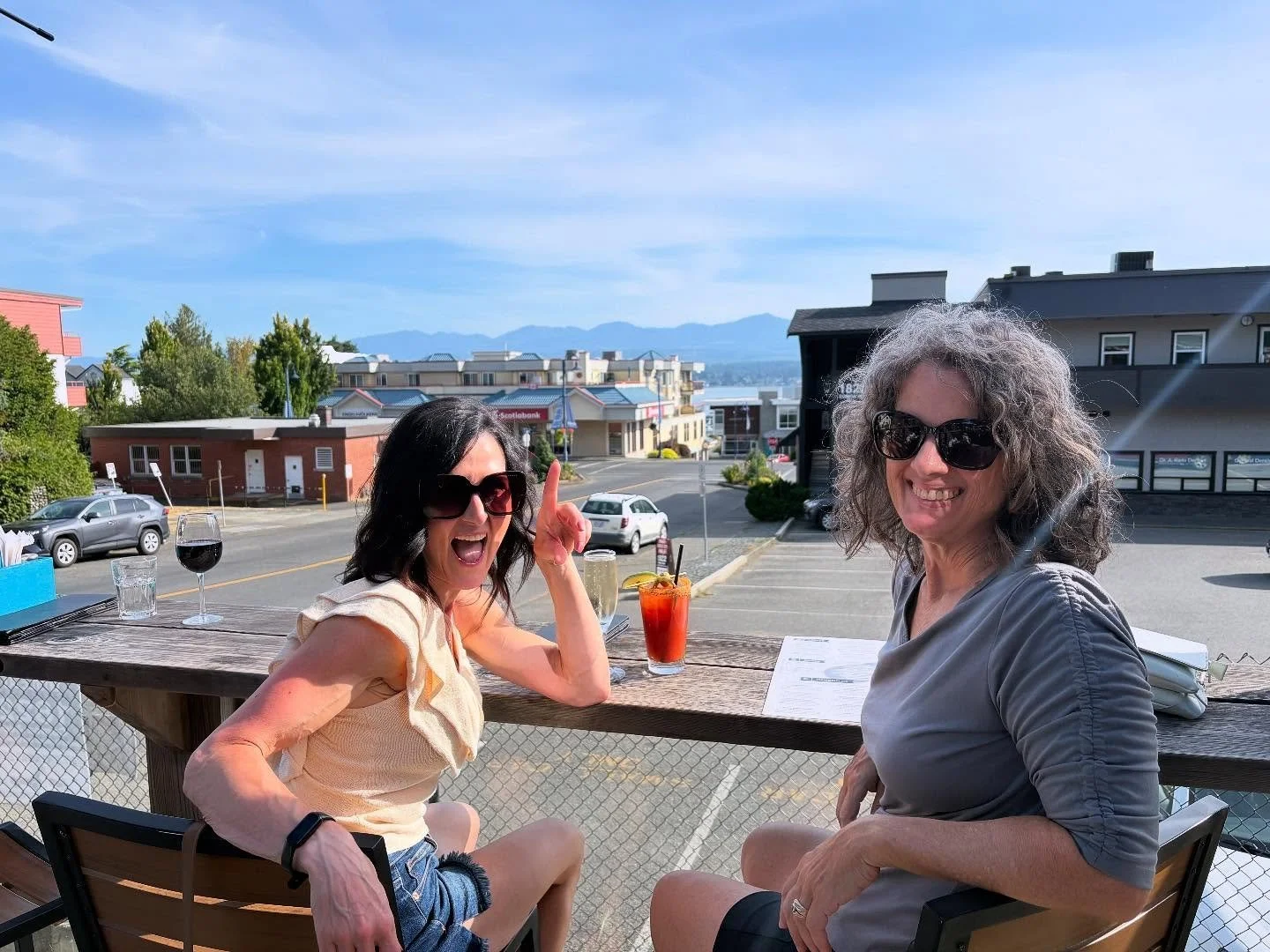
Greetings from Comox Valley! We went for a hike and later enjoyed some drinks at a local pub. It was a great day filled with wonderful memories. Here’s what I wrote about the Torresella Extra Dry Prosecco I enjoyed: “TASTING NOTES: Fresh and balanced, straw-yellow in color, it has a delicate aroma of green apples and white flowers. The flavour is subtle- very fresh, with notes of pears, apples, and citrus.” *told you I am a student of wine x

You didn’t suddenly gain weight because you turned 40.

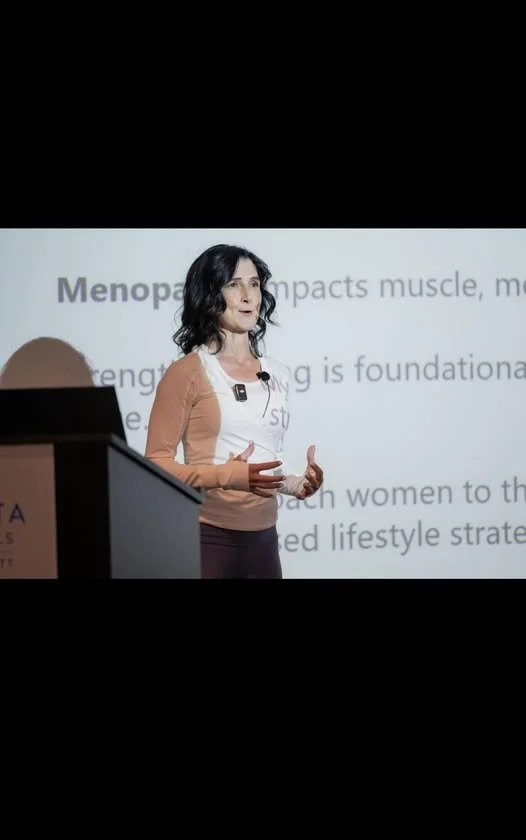
Last month I spoke at a Menopause Conference and I asked one big question:

**Is it menopause or is it aging?**

Let’s talk about it.....

You didn’t suddenly gain weight because you turned 40.

Midlife fat gain is usually a *muscle* problem, not an age problem.

Beginning as early as our 30s, we start to lose muscle at a rate of approximately 3 to 5 percent per decade.

After the age of 60, that rate often accelerates, with some individuals losing around 1 percent of their muscle mass each year.

This process is slow and silent. It creeps in gradually.

When we lose muscle:
• Blood sugar control worsens
• Insulin sensitivity tanks
• Fat storage ramps up
• Energy becomes unstable

And the solution is not:
✖️ more dieting
✖️ more cardio
✖️ shrinking yourself into nothing

The solution is:
**Progressive, structured strength training** that is designed to *build* muscle.
Not random workouts.
Not avoiding progressive overload because it feels scary.

And it has to be consistent. Long term. Non negotiable.

"Muscle drives glucose disposal, nutrient partitioning, metabolic resilience, and visceral fat reduction. It is the engine of your metabolism."

If you care about long term health, stop trying to get smaller.

**Build. More. Muscle.**

Because building it is hard.
Losing it is easy.
Lifestyle changes are the foundation of weight management at every stage of life.

You need to lift weights.
Oh and you don’t need a “menopause program.”
What you need is a barbell or dumbbells in your hands, along with a solid workout plan tailored to your goals, fitness level, and lifestyle. Your plan should be flexible and adaptable, and you should have a support system—like a coach or a community—that believes in your health and fitness, just like in any other phase of life.

If you are struggling with your workouts and need direction, please don’t hesitate to reach out. This is my zone of genius.

Love, Deanna

Here I am talking about my favourite subject in the world- building muscle. :)

The Trade-Off Between Extreme Leanness and Quality of Life

It feels like the world is shrinking again. With the rise of GLP‑1 medications and a renewed focus on thinness, we’re sliding back into the notion that women should take up less space. It’s frustrating, especially when it seemed like we were moving beyond that. I’ve been shouting about this for a decade... ugh.

To be clear, GLP‑1 medications can be life changing for many people. There’s no judgment here. The concern is the growing pressure to focus on getting smaller instead of getting stronger. And for women, that shift comes with real consequences.

THE TRADE-OFF: LEANNESS VS. QUALITY OF LIFE

There are trade-offs between extreme leanness and your quality of life. Women begin losing muscle in their 30s at a rate of about 0.5–1% per year, and the pace increases with age. By our 60s, that loss can reach 3% per year. Because women start with less muscle overall, this decline can show up sooner in everyday life: carrying groceries, climbing stairs, staying balanced, and keeping up with the activities we love. It also raises the risk of falls, injuries, and frailty.

This isn’t about aesthetics. It’s about function, independence, and longevity. If you want to keep living fully....traveling, training, playing, working, showing up for your life—strength matters. Muscle isn’t something to lose. It’s something to PROTECT. Your muscles either grow, or go.

WHY I FOCUS ON STRENGTH, NOT SHRINKING

That’s why I created my Online Strength Program. It’s not about burning calories or chasing exhaustion. It’s about building real, sustainable strength through smart programming, daily coaching threads, and form checks that help you train with confidence. You’ll learn how to build a body that adapts, recovers, and supports you for the long haul.

If that’s the kind of strength you want, I’d love to coach you. And if you’ve been on the fence, consider this your sign. There’s still time to join us. We just started Monday, and you won’t be behind. I’ll meet you exactly where you are and get you lifting with confidence. Check out my “Work With Me” section and drop me a message!

UPCOMING: SPEAKING AT THE MENOPAUSE EVENT

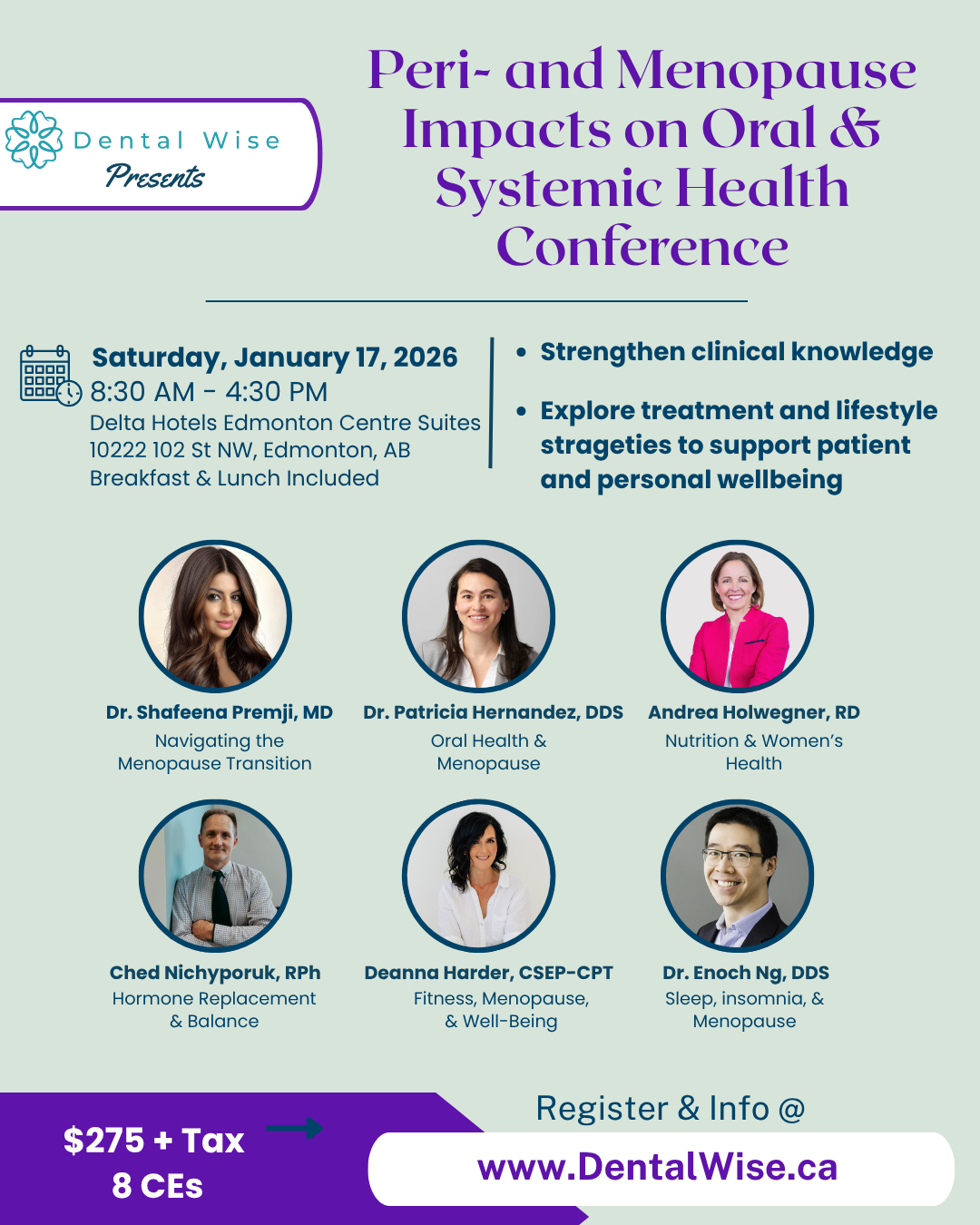
I’m excited to announce that I’ve been invited to speak at a dental conference next weekend about the importance of strength training during menopause. And it’s not just for dentists! Come learn from industry experts as we explore everything you’ve ever wanted to know about menopause: what’s happening in your body, what your mom never told you, and how to thrive through every stage.

I’ll be teaching the benefits of strength training during the menopause transition and why building muscle is essential for aging with confidence, vitality, and independence. As I like to say, “age however you want”—on your terms. I’m bringing my dumbbells to demonstrate four of my favourite muscle‑building exercises and to give participants a 20‑minute take‑home workout. If you sign up, make sure to come and say hi to me! :) 

Yours in STRENGTH,
Coach Deanna

Understanding the Menopause Transition: Fitness Tips for Real-Life Relief.

Let’s get real about menopause for a minute: if you’ve ever found yourself wide awake at 2am, sweating through your pajamas, or wondering why your mood swings could rival a toddler’s, you’re not alone. The menopause transition is a wild ride—and while I haven’t experienced hot flashes myself (my symptoms aren’t vasomotor), so many of my clients are right in the thick of it. And while it can feel like your body’s suddenly playing by a whole new set of rules, I promise: you’re not powerless, and you’re definitely not broken. 

I remember coaching a client through her first hot flash in the middle of a workout—one minute she was crushing squats, the next she was fanning herself with a towel, questioning all her life choices! Sound familiar? The hormonal shifts of perimenopause and menopause can affect everything from sleep and energy to motivation and muscle mass. But here’s the good news: smart fitness choices can make a real difference in how you feel—physically and mentally.

What’s Actually Happening? <= click and watch! 

(And Why It Feels So Weird) *Thanks Dr. Jen Gunter! 

Estrogen and progesterone start to fluctuate (and eventually decline), which can mess with your sleep, mood, metabolism, and even your joints. You might notice:

  • Night sweats and disrupted sleep

  • Unexplained weight gain, especially around the middle

  • Muscle loss or feeling weaker

  • Random aches, pains, or joint stiffness

  • Low motivation or mental fog

It’s not your imagination, and it’s not a lack of willpower. Your body is adapting—and it needs a new approach.

Fitness Strategies for Managing Menopause Symptoms

  • Prioritize strength training. Muscle mass naturally declines during menopause, but resistance training helps preserve (and even build) lean muscle, which supports metabolism and joint health. Aim for 2-3 sessions per week. Not sure where to start? I can help! 

  • Embrace shorter, consistent workouts. Energy dips and sleep disruption are real. Instead of marathon sessions, go for 20-30 minute strength or mobility workouts. Consistency > perfection. See this post. 

  • Focus on protein first. Higher protein intake supports muscle repair and helps keep you fuller longer. Try adding Greek yoghurt, a few eggs, or a protein shake to your day. 

  • Don’t skip mobility and recovery. Hormonal changes can make joints cranky. I always include a mobility warm up, foam rolling, or yoga to a clients routine. Your body will thank you.

  • Give yourself grace. Some days, your best effort might be a walk or a stretch. That’s not a failure—it’s honoring what your body needs right now.

Action Steps: Your Menopause Fitness Toolkit

  • Pick 1-2 strength exercises (like squats, glute bridges, push-ups, lunges) and do them for 10 minutes, 3x this week.

  • Prep a high-protein snack for the week (Greek yoghurt parfait, protein muffins, or boiled eggs). TBH- I bring protein bars everywhere in case I find myself in a pinch.

  • Set a bedtime alarm as a reminder to wind down—sleep is your secret weapon.

  • Track your energy and mood for a week. Notice any patterns? Share them with me—I’d love to help you troubleshoot!

If you’re ready for more support, my online muscle and strength training group is designed for women in midlife navigating these changes. You’ll get daily coaching, real talk, and a community that gets it. Send me your questions or goals and let’s make this transition one you feel strong through. I am taking members in October, so reply and I will put you on the waiting list. I would love to work with you. 

Love and muscles in menopause,
Coach Deanna


Finding EASE with your food in 2025...

Hello and Happy New Year to everyone! I hope you're feeling rested, well-fed, strong and ready to tackle your goals for the year ahead. Or maybe you're not thinking about that until January 6th? You can do whatever you want. lol 

Everyone shits on New Year’s resolutions but I do believe it is worthwhile to take some time to reflect on the past year in order to be more deliberate about the year ahead.

I am sure you see a lot of people who like the idea of eating in moderation but struggle implementing this concept. And I get it, it feels vague to just eat what you want in balanced amounts.

So today we are talking about the EASE model with the goal to help you simplify eating, eat foods you love, all while making progress toward your eating goals.

The first E stands for Education. I think a lot of times with moderation or intuitive eating there is the assumption that you just eat whatever and you will be happy and feel healthy. But if we are not aware of what we are putting in our body we can make choices that might not be the best for us or any specific goal.

For example, you might decide to roast up some vegetables in olive oil and give up wine or whatever cocktail you really want for the evening in attempts to be healthier.

But if you are unaware that 5 TBSP of olive oil is the caloric equivalent of 5 glasses of wine you would then recognize that you might as well have the wine because from a caloric standpoint one 5 ounce glass of wine is the same as one TBSP of olive oil. *120 cals 

Yes these foods will process and digest differently but you are not enforcing health by eating oil drenched vegetables and giving up the wine. So yes I am telling you to drink the wine. How's that for a nutrition program in January?!  

It is important to remember what you are actually taking in which will allow for more flexibility in your diet, including foods you enjoy. And if you are enjoying the way you eat you will stick with it longer and if you stick with it, you will see the results you are looking for.

So yes of course there is more to it than just this but my clients are quite surprised with what they don’t have to give up and that begins on being educated on your food choices.

More to come in a few days where I will discuss the “A” of the EASE formula.

Deanna 

Image below:

Here I am with my bestie Charlotte enjoying two small glasses of Prosecco last night ( NYE) at NoWhere Wine Bar.

Since I am never deprived there is no need to overindulge, even on New Year's Eve. Wine is plentiful, and it is not going anywhere. ;)

Could it be PERIMENOPAUSE?

Many women over 45 tell me that they've gained belly fat and lost their waistline. They also wonder what happened to their muscle mass.

"Could it be PERIMENOPAUSE? What's happening? I feel like I don't recognize myself!"

Enter: Hormone-related belly fat gain and hormone-related sarcopenia (aka muscle loss)

Alongside hormonal shifts, women often experience an increase in visceral fat accumulation during perimenopause due to fluctuating and declining hormone levels. It is important to know that on average, visceral fat increases from 5% to 8% of total body fat pre menopause to 15% to 20% of total body fat post menopause..

WHAT YOU CAN DO ABOUT IT...** we want SOLUTIONS!
Guess what? We are adding. 🙂

= Add Resistance Training- Lift heavy shit 2-4 days a week. Estrogen is anabolic (i.e. muscle making). When it declines, so does your lean muscle mass.

=Add in 1 Sprint interval training session per week ( this is the goldilocks-- more isn't better!)

= Sleep is a big deal. Bed time routines become a non negotiable - no more scrolling and ramping up your nervous system before bed.. 😉

=Add more more fiber and complex carbs to manage blood sugar.=Add more protein. Ensure you get over 30 grams of protein with each meal and 15 to 20 grams for your snacks. In my program, we kick off the day with 30 grams of protein at breakfast to stay ahead!=Incorporate stress management into your daily routine.

What is your action plan?

Could you start with ONE change and take notes?

No need to overhaul your entire lifestyle, but things need to change in this phase of life.

I can no longer tolerate too much exercise as it hinders my recovery and interrupts my sleep. Drinking more than 2 glasses of wine disrupts my sleep and leaves me feeling terrible the next day, so I limit myself to 2.

I stick to my bedtime routine even on weekends when possible. I start my day with protein and include carbohydrates and fiber in every meal, avoiding fasted training.

Additionally, I need to manage stress carefully; this weekend, I let someone undeserving occupy my thoughts, which agitated my nervous system. Therefore, I regularly take audits on my lifestyle too.

You have more control over navigating perimenopause than you may realize.

If you are struggling and need help, please reach out. I am here to give you solutions.

Hot tip: don’t go anywhere without your meatsuit. ;)

My Menopause Manifesto...

My menopause manifesto:


I can't stop ageing but I can slow the effect of ageing down by optimizing my sleep, managing my stress and nourishing my body.

I can fuel myself with the appropriate amount of calories that satisfy my body and soul.

I can focus on building and preserving as much lean muscle mass as possible.

I can move more to offset all the sitting on my ass I do each day.

Instead of a woman expecting to maintain or chase down the same body shape and body fat percentage of her 20yr old self, lI want to help her be compassionate towards her midlife body.

I take responsibility for managing this situation in mid life with the appropriate lifestyle choices to create the best hormonal environment possible.

Age however the fuck you want.

Your coach,

Deanna

Suddenly we’re in a whole new era where perimenopause is an open conversation and I love it. I am 46 and the more I learn about this phase of life, the more I am openly talking about it to help erase the taboo and fear around aging.

WTF Perimenopause!!

Several weeks ago I asked my audience about what concerns or struggles they were dealing with the most. I received more replies with questions about perimenopause and weight gain so I thought I'd share with you a few things. 


Perimenopause usually begins in your 40s, a good 8 to 10 years before menopause (I had no idea was this long, you?). It's similar to puberty in the sense that we go through a whole lot of physiological shifts. We'll all experience different changes at different times and to different degrees, but one thing that is certain - we're all going to go through it at some point or another. 


Symptoms of perimenopause may include: 

Hot flashes

Irregular Periods, heavier periods or worse PMS

Weight gain

Heart palpitations or increase in heart rate

Brain fog

Loss of sex drive 

Vaginal dryness 

Night sweats 

Insomnia 

Mood swings 

Changes in skin and hair

And of course the symptom I get asked about most, weight gain.

The things you used to be able to get away with aren't working for you anymore. You FEEL like you LOOK at a ice cream and gain weight. You're eating well, yet STILL feel like you're gaining weight around your belly.


You're not crazy, and you're not alone. It's all true. And as unfair and annoying as it is, if you want to get results - at least when it comes to decreasing body fat - you're going to have to work harder than ever. But the message is clear. It is still a matter of calories in and calories out. If you are eating more calories than you are burning, you will gain weight, whether peri-menopausal or not. 


One of the reasons women experience (what seems to be unexplained) weight gain is due to decreased insulin sensitivity. Decreased insulin sensitivity (or insulin resistance) essentially means that we aren't as efficient at clearing blood sugar out of our blood stream, leaving higher amounts circulating eventually to be stored as fat. 


All this means is that what you eat (and drink!) becomes EVEN MORE IMPORTANT. You likely need to pay closer attention, or re-examine your intake, specifically your simple carbohydrates. Taking down the amount of less nutritious, sugary carbs and do your best to increase your healthy grains, veggie and PROTEIN intake will go a long way here.


This also means that you need to be VERY aware of all the little things you mindlessly pop in your mouth throughout the day. The handful of nuts, eating the leftovers on your kids plates and licks, bites, and tastes while you are cooking.. , etc...They ALL add up, and remember, hormonally you're simply NOT in the same place you were before going through these shifts. 


Wanna know what INCREASES insulin sensitivity? 


Resistance training!!  Building muscle is *literally* like insurance for your body. If you haven't started yet, START NOW! And if you need help with this, please let me know. 


So many women come to me telling me that they've increased their running mileage or started taking more spin classes, Peloton sessions or Orange Theory bootcamp classes in order to lose a few pounds, when that may be adding to the problem!


I know, it's super counterintuitive, but more cardio and group exercise classes aren't your answers during this phase. That doesn't mean they're "bad" or you shouldn't do them - but if you're doing them *in place of* following a progressive style strength training program, you're focusing on the wrong thing. And just so you know, this isn't my opinion, it's science. 


Listen, I completely understand loving small group style bootcamp classes. I do. I mean, I taught group exercise classes for 15 years!  I get that it's social, and if you are competitive they are great for that, and you truly love them. I also understand you may not enjoy strength training, but I'm not here to tell you what you want to hear  Building muscle is key. Most body pump, circuit style classes aren't the most effective way of doing that. I wish they were, especially if you are a social person. 


The other things that need to be considered? Alcohol, stress and sleep. I have covered sleep in a previous email and I would love your feedback.

 I am 46 and am planning on aging the best way I can. That includes adding as much muscle mass as possible! Howboutyou?


Love and Squats,


Deanna 

Is the Juice Worth The Squeeze?

Current muscle mass I am carrying and I am not stopping!

Something I wish I could go back and tell my 25 year old self.....

DEANNA, YOUR LIFE IS SO MUCH FUCKING BETTER WITH A LITTLE MORE BODY FAT!!

When I was balls deep into Figure Shows my ONLY goal was to look as shredded as possible, at any cost... which at the time I didn't know would come along with a heavy price tag.

A few days ago, I posted here how there are trade-offs... health is not a look, and being lean - chasing a 6 pack as a female comes at a cost. There is a massive difference between my “goal body” and my lifestyle body.. aside from how it looks!

When my personal (love) life, social life and business started to crumble, I had a big wakeup call.... IT WAS JUST NOT WORTH IT!

The amount of time and effort it took to stay in that body....fuuuuck, The juice was NOT WORTH the SQUEEZE ! 🍋

YES, there are moments where I catch myself gazing at old photos, *which BTW I have deleted almost 100 of them, I remind myself about the costs of what that actually took to look like that.

I had FOOD OBSESSION, missed out on social engagements in fear of not being in control of my food, there were chronic food calculations going on in my head, exercise dependence…

FUN FACT, I trained 7 days a week for 7 plus years... yep.. back in 2007-2014 and beyond you could find me 7 days a week, sometimes twice a day at any of the 4 gyms I had memberships with ! LOL ** yes 4 gyms=obsessed anyone?

These days life is a whole lot better with more bodyfat.

My lifestyle goal physique is one that I can sustain 365 -where I can lift heavy, recover well, have my period each month, and eat foods I love in moderation. Absolutely my physique will always take some level of work to maintain, but it is enjoyable and effortless FOR ME NOW!

I love how I train and I love how I eat... #sustainable365

I want that for my clients too.

Can you relate? Have you ever gone to extremes only to crash and burn? If so, I am the coach for you.

Let’s Talk About Perimenopause

I've been openly talking about peri menopause with my clients and on my socials, not only because I am taking my second Menopause Health and Fitness Specialist Course, but because this is my life now- my niche and because I am 46 and entering mid life.

Perimenopause is the period leading up to menopause. Menopause is reached when you haven’t had a period for 12 months. So when people say ‘I’m going through menopause’ what they really mean is ‘I’m going through this cluster-fuck called peri-menopause, which will hopefully lead to actual menopause, swiftly.’ 

When I tell people that I am in mid-life they exclaim ‘but, you’re too young for that!’, which isn’t true.
At 46, I am well within the age category to be in this stage of life.

Peri-menopause starts as early as our late 30’s and the average age in the US and Canada to reach actual menopause is 51. I have a friend and colleague who at 36 is in early menopause.

For many of my ladies, one of the most dramatic symptoms they have reported this far are erratic AF periods

One client reported a cycle that was 13 days long. Good times!

Other symptoms are heavier than usual periods, for me my cycle is shorter- 21-28 days vs 28 days last year. Nothing crazy, but just something to pay attention to.

Feeling hotter than normal???
Look, you ladies are always ‘hawt’ AF, but I mean, you feel like you’re running hot. You will experience this randomly in Peri. 

Night sweats where you want to keep the windows open, then you’re fucking freezing. Repeat until it’s time to get up d your PJ’s are actually damp with sweat.

Once women hit the menopausal transition, sleep really takes a dive. As your hormones decline, sleep is disrupted-including trouble falling asleep and frequent awakening.

Different body fat distribution. Many will complain their waist is thicker than it was 5 years ago. 

Other people report wild mood swings, appetite changes, depression, anxiety and the list goes on and on. But that doesn't mean we can't change your body comp again in midlife. 
 

I can't stop ageing but I can slow the effect of ageing down by optimizing my sleep, managing my stress and nourishing my body.

I can fuel myself with the appropriate amount of calories that satisfy my body and soul.

I can focus on building and preserving as much lean muscle mass as possible.

I can move more to offset all the sitting on my ass I do each day.

It's all a work in progress!

And this is the message that needs to be shared with all of my clients.

Instead of mindlessly blaming hormones, let's focus on the things that can be controlled, improved, worked on.

Instead of you feeling like you are a slave to the internal workings of your body, I want to help you be proactive and empowered with evidence based knowledge. ** this is why I took this course.

Instead of a woman expecting to maintain or chase down the same body shape and body fat percentage of her 20yr old self, lI want to help her be compassionate towards her midlife body.

I know it can be difficult to get these messages across; some clients aren't ready for it, nor are they wanting to accept responsibility.

But they need to know the truth of it.

And it's my job to lead them there.

I take responsibility for managing this situation in mid life with the appropriate lifestyle choices to create the best hormonal environment possible.

If you are struggling, you don't have to do it alone. I can help.

Your Coach,

Deanna 

Today’s gonna be a good day because my dress is very twirly AND has pockets. :)